WhistleDev Home

Category

Investigative Tech

20 articles

What 'Improved Performance and Stability' Actually Means: Decoding the Changelogs Companies Don't Want You to Read

What 'Improved Performance and Stability' Actually Means: Decoding the Changelogs Companies Don't Want You to Read

Public release notes have quietly evolved from honest documentation into a corporate politeness filter, obscuring everything from privacy rollbacks to unpatched vulnerabilities behind cheerful euphemisms. WhistleDev compares internal commit histories against public-facing changelogs across popular consumer apps to show what's being hidden — and how to read between the lines.

Deadline or Deathbed: The Developer Movement Pushing Back Against Timelines Built to Fail

Deadline or Deathbed: The Developer Movement Pushing Back Against Timelines Built to Fail

Across the US technology sector, a quiet but consequential movement is emerging: developers who are formally documenting and refusing unrealistic project deadlines rather than absorbing the professional and ethical consequences of shipping broken software. This investigation examines the legal landscape, the retaliation playbook companies deploy against resisters, and the strategies developers are using to push back without destroying their careers.

Bounty or Buyout: How Bug Programs Became Corporate Tools for Controlling the Vulnerability Narrative

Bounty or Buyout: How Bug Programs Became Corporate Tools for Controlling the Vulnerability Narrative

Bug bounty programs are marketed as a sign of corporate transparency and security maturity — but a closer examination reveals a different architecture entirely. Through suppressive payout structures, labyrinthine legal agreements, and disclosure timelines designed to outlast public interest, major tech companies have quietly transformed these programs into instruments of narrative control. What was once a promising model for open security research has become one of the industry's most effective

Equity as a Muzzle: How Vesting Schedules and Bonuses Are Engineered to Keep Developers Silent

Equity as a Muzzle: How Vesting Schedules and Bonuses Are Engineered to Keep Developers Silent

The most effective mechanism for suppressing security disclosures in tech companies is not the NDA or the threat of termination — it is the compensation package. By structuring equity vesting, performance bonuses, and promotion timelines to peak precisely when developers are most likely to witness serious misconduct, companies have built a financial architecture that makes silence the rational choice.

Passing Grades, Failing Systems: The Performance Testing Illusion Propping Up Fragile Infrastructure

Passing Grades, Failing Systems: The Performance Testing Illusion Propping Up Fragile Infrastructure

Across the American tech industry, load testing has quietly transformed from a rigorous engineering discipline into a carefully choreographed compliance ritual. Companies design performance benchmarks their systems are virtually guaranteed to meet, generating green checkmarks on audit reports while leaving production environments dangerously unprepared for real user traffic. When the outages arrive — and they do arrive — the testing documentation becomes a liability shield rather than a lesson l

Green Light, Red Flag: How Security Scanners Became a Shield Against Accountability

Green Light, Red Flag: How Security Scanners Became a Shield Against Accountability

Across the American tech industry, companies are deploying enterprise-grade vulnerability scanning tools not to remediate security risks, but to manufacture the appearance of due diligence for auditors, investors, and regulators. Developers watch the same critical findings cycle through dashboards quarter after quarter, untouched and unaddressed. The tools designed to surface danger have been quietly repurposed as instruments of institutional cover.

Designed to Miss: How Corporate Security Programs Are Built to Protect Budgets, Not Systems

Designed to Miss: How Corporate Security Programs Are Built to Protect Budgets, Not Systems

Inside many of America's largest tech companies, internal security testing programs operate with a quiet, structural flaw: they are engineered to surface only the findings that are cheap to fix. Through interviews with developers who have watched critical vulnerabilities vanish into managed programs, WhistleDev investigates how bug bounties, penetration testing schedules, and vulnerability assessment frameworks have been quietly optimized for regulatory optics rather than genuine risk reduction.

Kicked Upstairs: How Tech Companies Neutralize Security Advocates by Promoting Them Out of Relevance

Kicked Upstairs: How Tech Companies Neutralize Security Advocates by Promoting Them Out of Relevance

When a developer becomes too vocal about security vulnerabilities, some companies have found a surprisingly clean solution: give them a title, take away their tools, and call it a promotion. This investigation examines the systemic pattern of moving security-conscious engineers into management roles that carry prestige but strip away the technical authority needed to enforce change.

Counting Approvals, Missing the Point: How Review Metrics Are Quietly Dismantling Code Safety

Counting Approvals, Missing the Point: How Review Metrics Are Quietly Dismantling Code Safety

When engineering managers begin measuring how fast developers approve pull requests, the entire purpose of code review collapses under the weight of performance pressure. This investigation examines how gamified review systems have transformed one of software development's most critical safety mechanisms into a rubber-stamp assembly line—and what developers can do when they find themselves complicit in a process designed to fail.

Certified and Compromised: How Security Audits Became a Performance for Paying Customers

Certified and Compromised: How Security Audits Became a Performance for Paying Customers

Behind the framed compliance certificates hanging in corporate lobbies lies a carefully choreographed ritual designed to satisfy regulators while leaving real vulnerabilities untouched. Developers across the industry are speaking out about the gap between what auditors are shown and what actually runs in production — and the silence companies purchase to keep that gap invisible.

Approved and Ignored: When Peer Review Becomes a Permission Slip for Dangerous Code

Approved and Ignored: When Peer Review Becomes a Permission Slip for Dangerous Code

Code review was supposed to be the last line of defense before bad software reached production. At many companies, it has become something far more insidious: a formal ritual that creates the appearance of oversight while systematically failing to provide it. This investigation examines how peer review culture has been hollowed out from the inside.

Elevated and Entangled: How the Tech Industry Turns Promotions Into Loyalty Oaths

Elevated and Entangled: How the Tech Industry Turns Promotions Into Loyalty Oaths

Across the American tech industry, a quiet mechanism operates beneath the surface of career advancement: the strategic elevation of engineers into roles where their financial and professional stakes make dissent nearly impossible. WhistleDev investigates how companies manufacture complicity through the very systems developers are taught to aspire toward.

Carrots and Quiet: How Corporate Advancement Systems Are Used to Buy Developer Silence

Carrots and Quiet: How Corporate Advancement Systems Are Used to Buy Developer Silence

When junior developers discover critical security vulnerabilities, some tech companies respond not with legal threats but with something far more seductive: career rewards. This investigation examines how promotions, raises, and high-visibility assignments are strategically deployed to neutralize internal critics before they can become whistleblowers.

Watched at Work: When Your Employer's Monitoring Software Becomes Illegal Surveillance

Watched at Work: When Your Employer's Monitoring Software Becomes Illegal Surveillance

Tech companies are deploying increasingly invasive monitoring tools under the banner of productivity and security—but many of these systems quietly cross the line from legitimate oversight into unlawful surveillance. From keystroke loggers that capture personal passwords to always-on webcam feeds, developers are working inside digital panopticons they never agreed to inhabit. This investigation examines where the legal boundaries lie, which states offer the strongest protections, and what develo

Poisoned at the Root: The Hidden Danger of Trusting Your Dependency Tree

Poisoned at the Root: The Hidden Danger of Trusting Your Dependency Tree

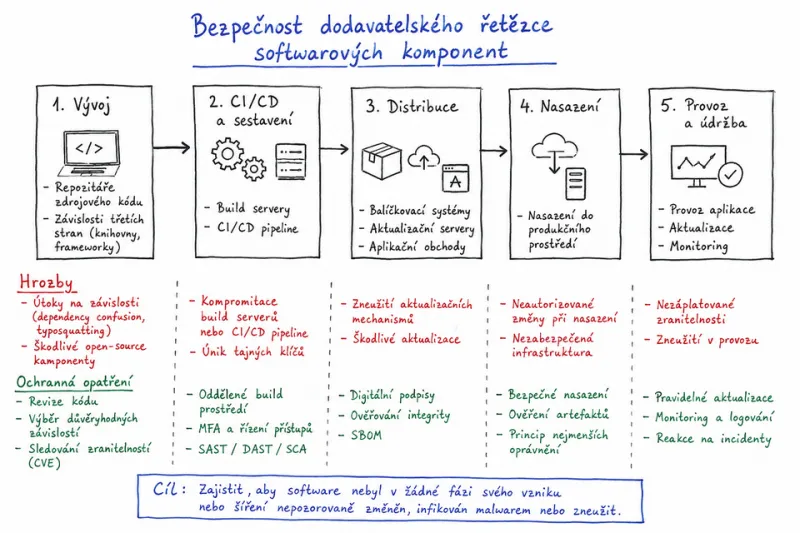
Millions of production applications quietly depend on code written by strangers, maintained sporadically, and increasingly targeted by sophisticated threat actors. From malicious npm packages to abandoned PyPI libraries, the modern software supply chain is riddled with vulnerabilities most engineering teams never see coming. This investigation examines how developers become unwitting participants in their own compromise—and what a more disciplined dependency culture actually looks like.

Code Rot from the Inside: Seven Unethical Development Practices Hiding in Plain Sight

Code Rot from the Inside: Seven Unethical Development Practices Hiding in Plain Sight

Some of the most damaging practices in software development never trigger a linter, never fail a test, and sail through code review without a single comment. From privacy-harvesting telemetry to strategically buried technical debt, unethical code patterns have quietly shaped some of tech's biggest scandals. Here's how to find them — and what to do when you do.